The quick answer
Choose a harness by your dog’s measurements, how it sits on their body and the type of walks you take. Attachment options come next. A useful feature list cannot rescue a poor fit.
Start with measurements
Use the manufacturer’s instructions to measure your dog before selecting a size. Brands can use different size labels, so a medium in one harness does not tell you which size to buy in another. Recheck measurements when your dog grows or changes shape.
Understand the attachment options
A back attachment keeps the leash away from the front legs during ordinary walking. A front attachment changes where the leash connects and may help with handling. Choose a product and training approach that suit your dog rather than expecting a clip to solve every pulling problem.
Check movement and contact points
Watch your dog walk while wearing the adjusted harness. Look for rubbing behind the front legs, restricted shoulder movement, loose straps or gaps that could let them slip out. Introduce unfamiliar gear gradually in a secure space.
Our starting point
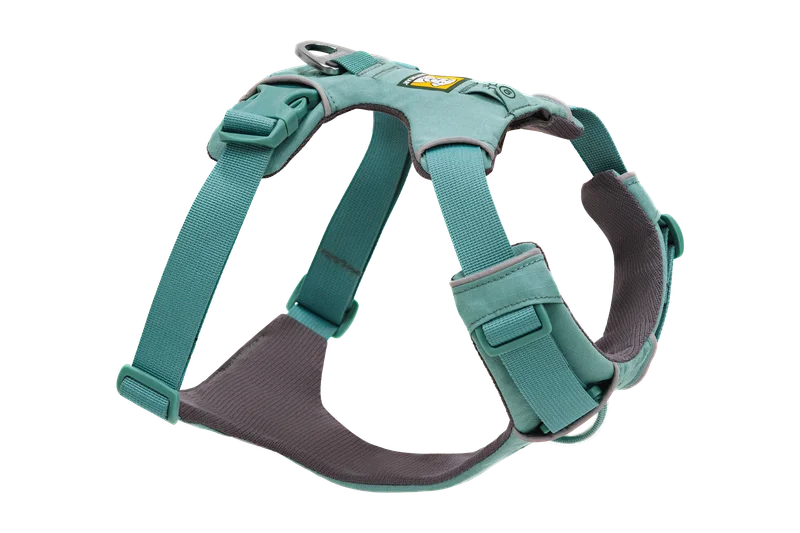
The Ruffwear Front Range is worth considering for general daily walks because it combines padding, adjustable fit and both attachment options. Read the full review for its strengths and the situations where a different design may suit you better.
Your questions, answered
Is a front clip or back clip better?
It depends on your dog and walking routine. Back clips suit ordinary walking; front clips offer a different handling position. Fit and training still matter.